The Look of the Games

It wasn’t just Izzy, the controversial Olympic mascot, that exasperated many Atlantans in the lead-up to the summer of 1996. Many journalists, politicians, committee members, artists, students, and average citizens found it difficult to spot any sense of their city in the official art of the 1996 Olympic Games.
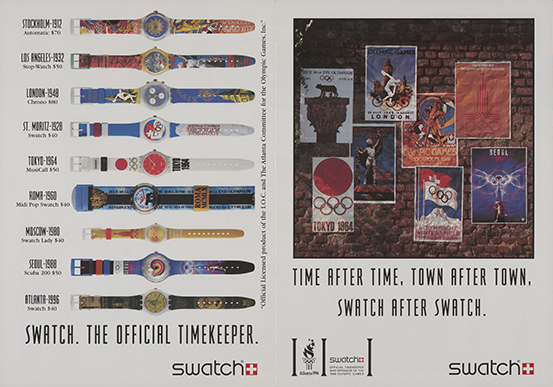
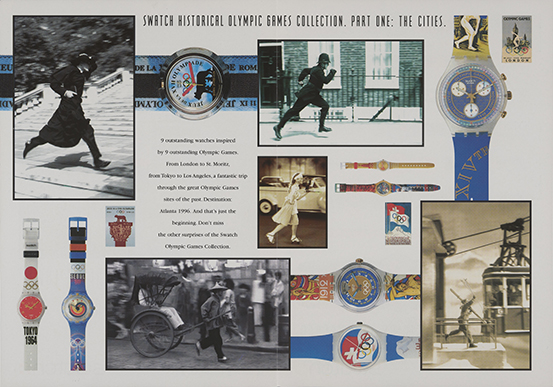
For the Centennial Torch logo, ACOG selected a Classical-inspired design that combined the aesthetics of a Greek column, the five Olympic rings, and rising stars as flames. The logo was beautiful, but many in the Atlanta art community grumbled that the design firm that made it was based in San Francisco. Iranian-American sculptor Siah Armajani designed the Olympic cauldron, to be lit the night of the opening ceremony, at the top of a bright white structure that bridged the two Olympic stadiums and was meant to be climbed. But after the design was unveiled, the first designed by an artist and not an engineer, many journalists were quick to compare the multi-colored metallic spiral to a cup of French fries. (Armajani would later disown the project over his contentious working relationship with ACOG.) And with time running out to create a coherent symbolism for their marketing materials, a “Look of the Games” committee brainstormed the use of leaves—to represent Greece, the home of the original Olympics—and a quilt, a common motif of Southern culture. A hand drawn-looking “Quilt of Leaves” design then went up on the official website, the side of venues, advertisements and tickets, tourist maps and MARTA decals, and this quilt symbolism would be the only visual (with the notable exception of Blaze the phoenix, the Paralympic Games mascot) from the 1996 campaign at all related to Atlanta.
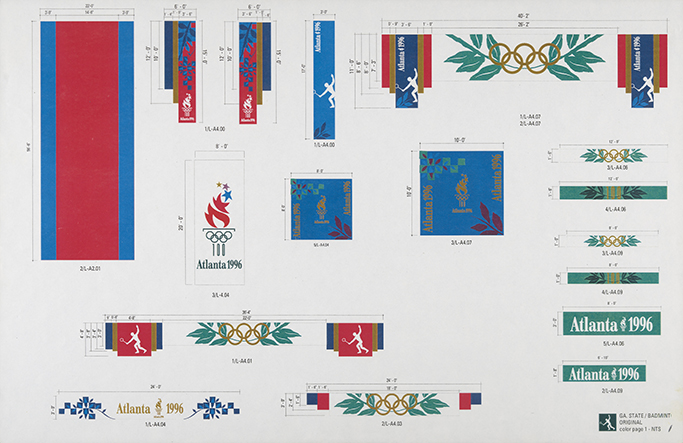
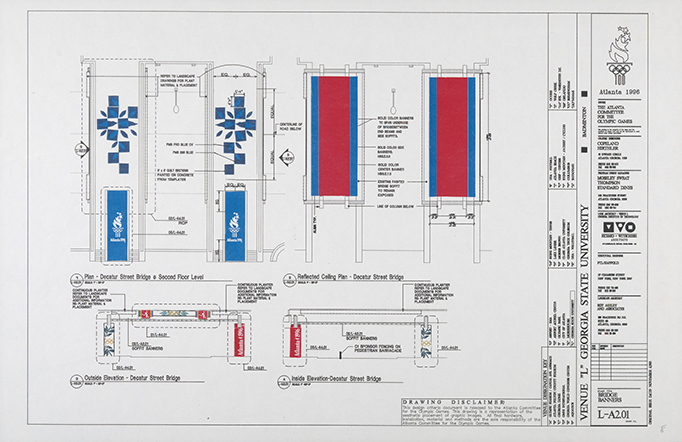
The generic aesthetic of the Games, which was made specifically to upset no one, also excited no one. Having little—or no—sense of the South, the state of Georgia, or the city of Atlanta meant that the “look of the Games” would come down to the green and gold column, Izzy, the official five-ring Olympic logo, and the corporate art on banners, T-shirts, and pins.