Racial Justice Issues

A Black man speaks at an onstage podium as others look on, in front of a banner reading "Defend the Black Panthers."
A Black Panther Party meeting, Tom Coffin, V003-700214-B026
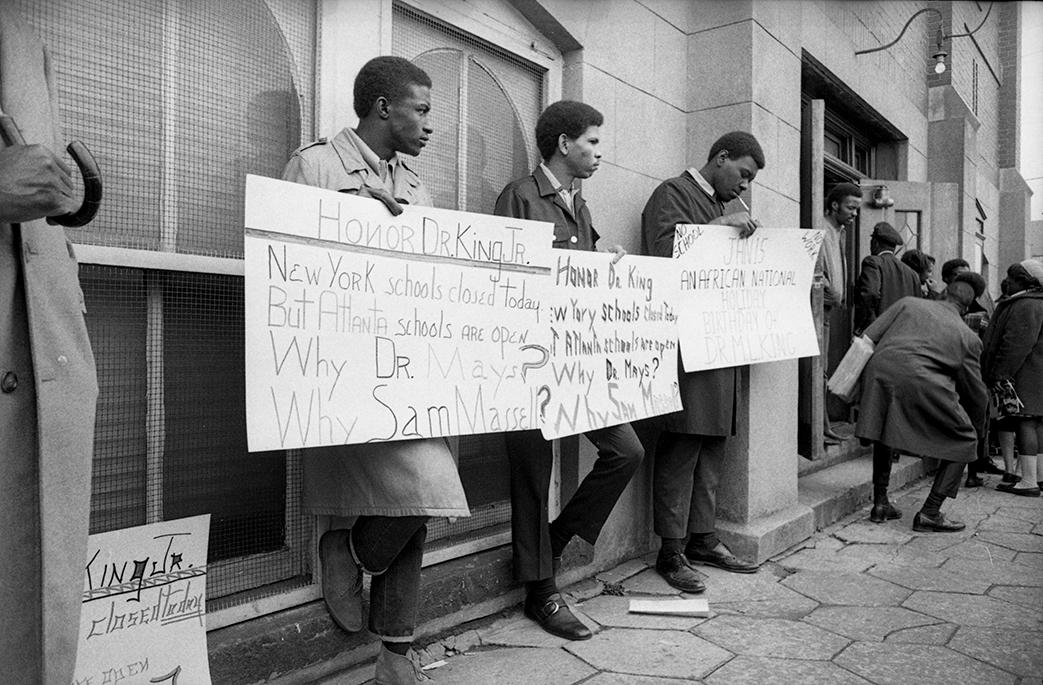
Three young Black men stand at the side of a building, holding protest signs that read, "Honor Dr. King Jr. New York schools closed today but Atlanta schools are open. Why Dr. Mays? Why Sam Massel?"
Protestors demanding commemoration of Dr. Martin Luther King, Jr., Tom Coffin, V003-700114-A02

Another priority of The Bird was covering issues of racism, civil rights
organizing, and police brutality. While many of the early staff members of the paper was drawn by anti-war activism, others, such as Gene Guerrero, Nan Orrock, and Sue Thrasher, came from a background in civil rights organizing. The paper was sympathetic to and supportive of organizations and movements working for black liberation, including the Southern Nonviolent Coordinating Committee (SNCC) and the Black Panthers. In addition, the paper reported on instances of police brutality against African Americans and called for the establishment of a Police Advisory Board to investigate instances of police misconduct.

Flyer to hear the Black Panthers speak, Saturday, February 14, 7:30, Georgia Tech Electrical Engineering Auditorium. "Mass Rally to Defend the Panthers."
Great Speckled Bird v. 3 no. 7 (February 16, 1970)
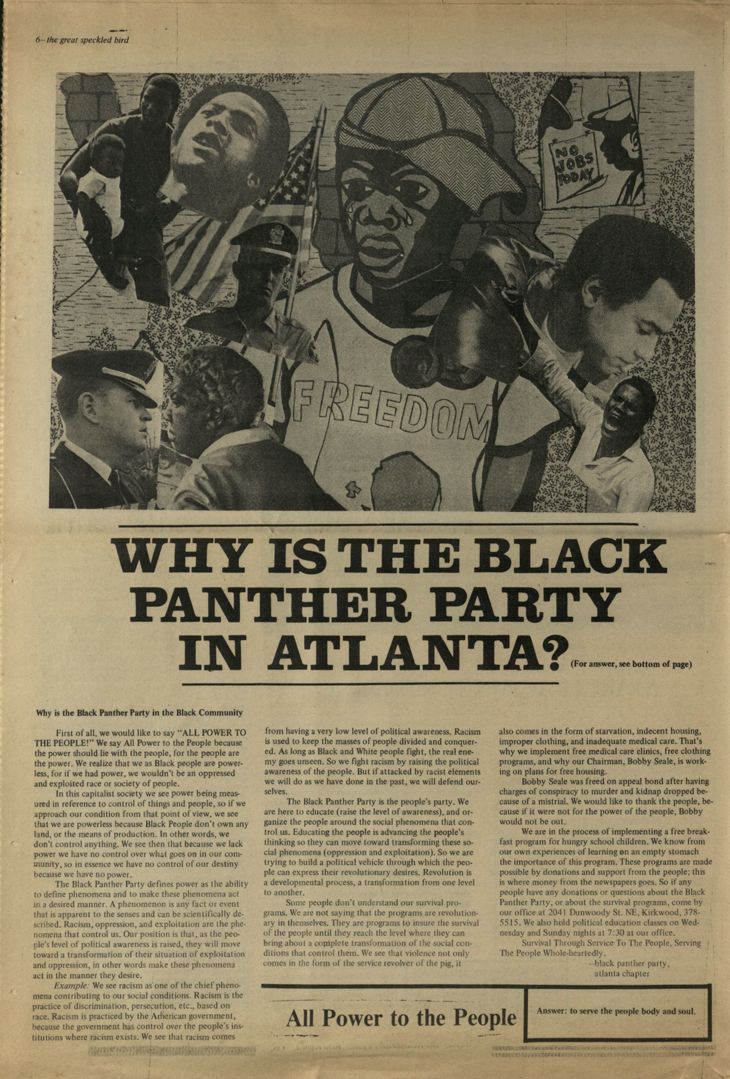
Full page of text, "Why is the Black Panther Party in Atlanta?"
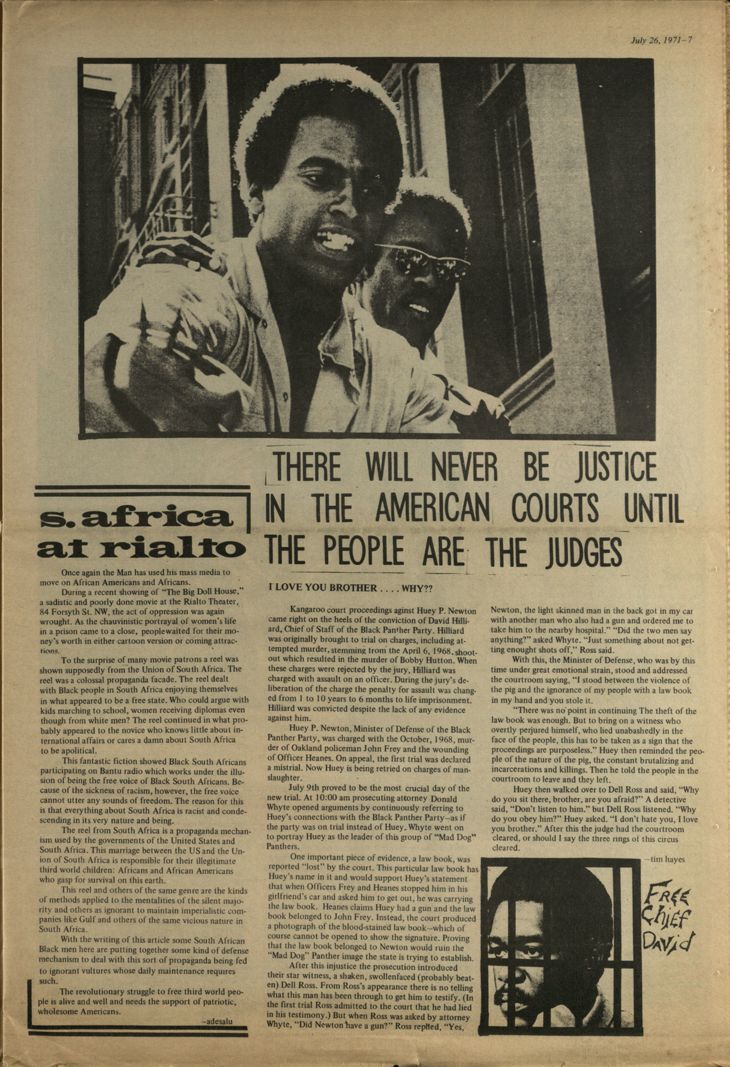
Great Speckled Bird v. 4 no. 30 (July 26, 1971)
Front Cover of the Bird, "I Love You Brother, Why? Huey P. Newton, on trial!" July 26, 1971.
Great Speckled Bird v. 4 no. 30 (July 26, 1971)
Full text of article, "There will never be justice in the American courts until the people are the judges."
Great Speckled Bird v. 4 no. 30 (July 26, 1971), page 7