Immigrant Entrepreneurs and Family Economies on the Southside
Like Summerhill’s Black residents, Jewish, Greek, and Syrian immigrants in the Southside neighborhood represented a mix of income groups. Some were comfortably middle class; others struggled to get by. Entrepreneurship on Georgia Avenue provided opportunities for upward mobility.
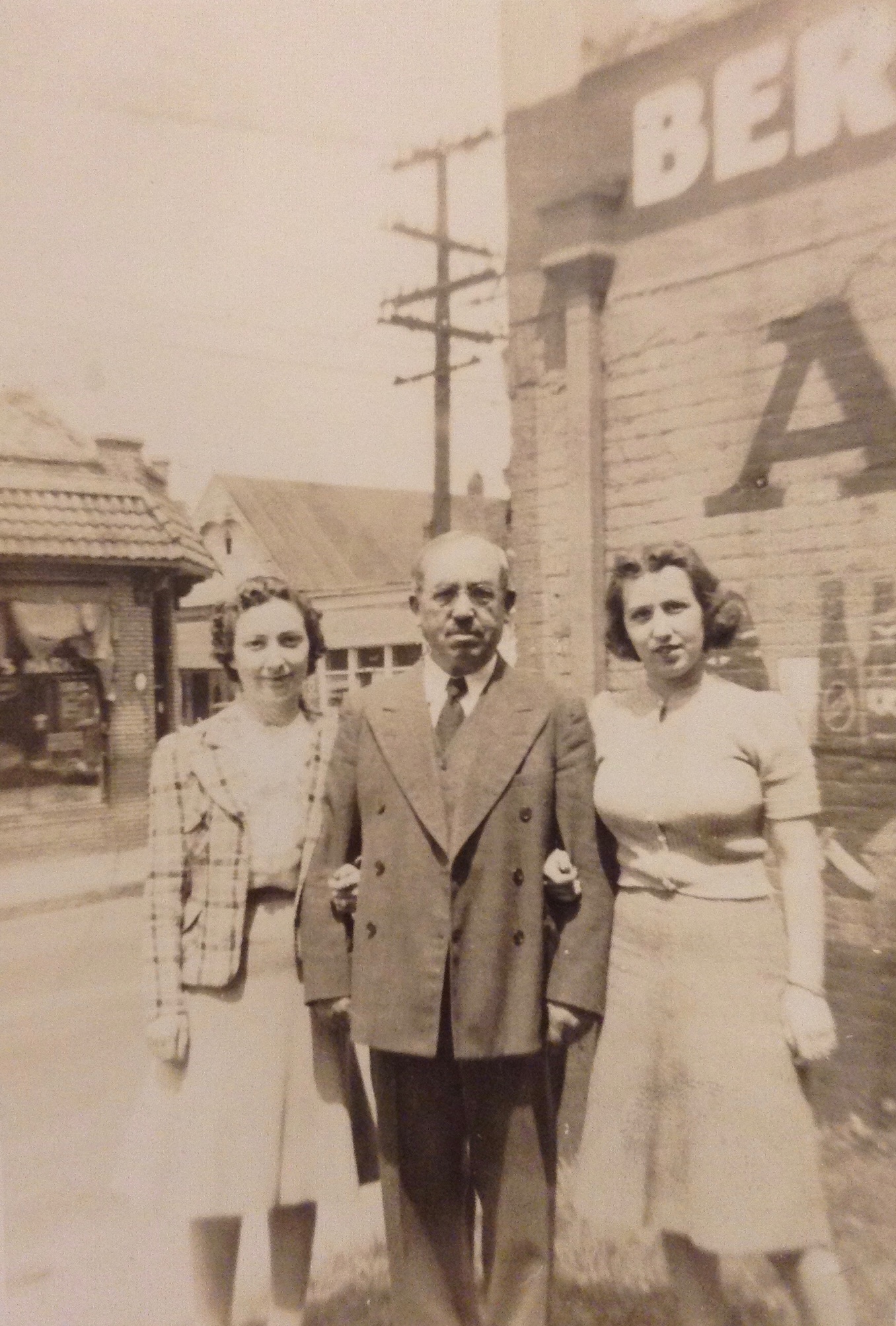
Some entrepreneurs lived in the same building, or on the same lot, as their business. In the early 1940s, Samuel Rosenberg, a Jewish immigrant from Poland, moved his family to a house at 37 Georgia Avenue, next door to Bernath’s Market and set back from the street. In 1945, he built a small brick store at the front of his property. “Sam’s Place” was a sundry shop (also called a confectionary store at the time) that sold bread, milk, chewing tobacco, cigars, headache powder, and single cigarettes for a penny apiece – “basic essentials” for the neighborhood’s working- and middle-class clientele, recalled Sam’s son Jack Rosenberg.
Sam Rosenberg and his daughters, ca. 1940.
Click “Play” arrow to hear a short interview with Jack Rosenberg
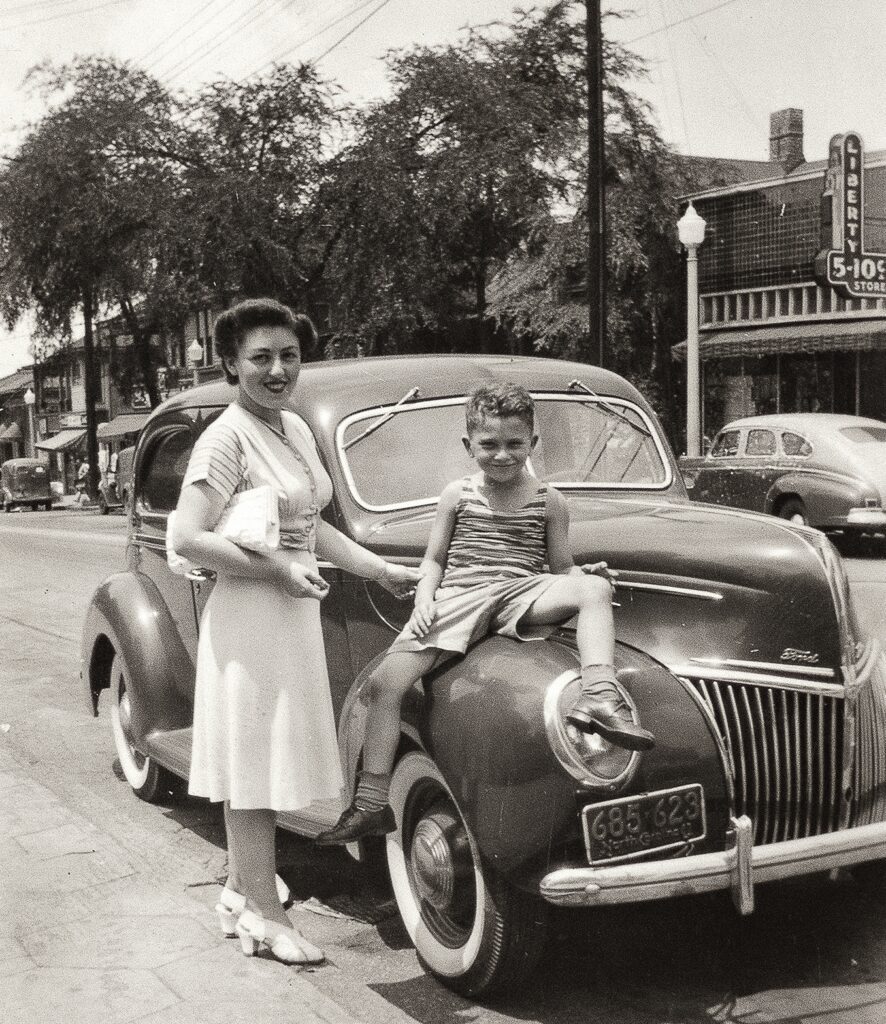
A photograph of Jack Rosenberg and his sister Mitzi provides a rare street-level view of Georgia Avenue in the early 1940s. Seven-year-old Jack sits on the family’s Ford Tudor, which is parked in front of their home. Behind them, on the north side of the street, stands the Liberty 5&10 Cent Store, owned by Beirut-born Charles Maloof – one of several Syrian- and Lebanese-born proprietors of Southside businesses. The camera faces west, taking in the entire block, all the way to the Carnegie Library at the corner of Capitol Avenue.
Jack Rosenberg and his sister Mitzi, ca. 1940s
Click here to see what this perspective on Georgia Avenue looks like today (on Google Maps Street View)
But by 1950, redlining was having its inevitable impact: the area was generally trending downward. Middle-class Atlantans were moving to the suburbs, taking their religious and communal institutions with them. Upwardly-mobile African Americans relocated to the suburbs west of downtown, while those without the means to move stayed behind.
Suburbanization also reshaped Atlanta’s immigrant and ethnic residential communities. In 1940, more than 700 immigrants, mostly Russian and Greek, lived on the Southside, making it the largest foreign-born enclave in Atlanta. By 1950, fewer than 400 immigrants lived there, while the number of foreign-born Atlantans in neighborhoods in the north of the city such as Morningside and Druid Hills grew significantly. Those who remained had fewer assets and less disposable income. Southsider Leon Tuck, whose father and grandfather owned Georgia Avenue’s kosher delicatessen, remembered that his family utilized the free Ben Massell Dental Clinic at the Jewish Educational Alliance on Capitol Avenue: “when I was a kid … we didn’t have any money to go to the dentist.”
Click “Play” arrow to hear a short interview with Leon Tuck