In Flux, Again
Georgia Avenue After the Braves
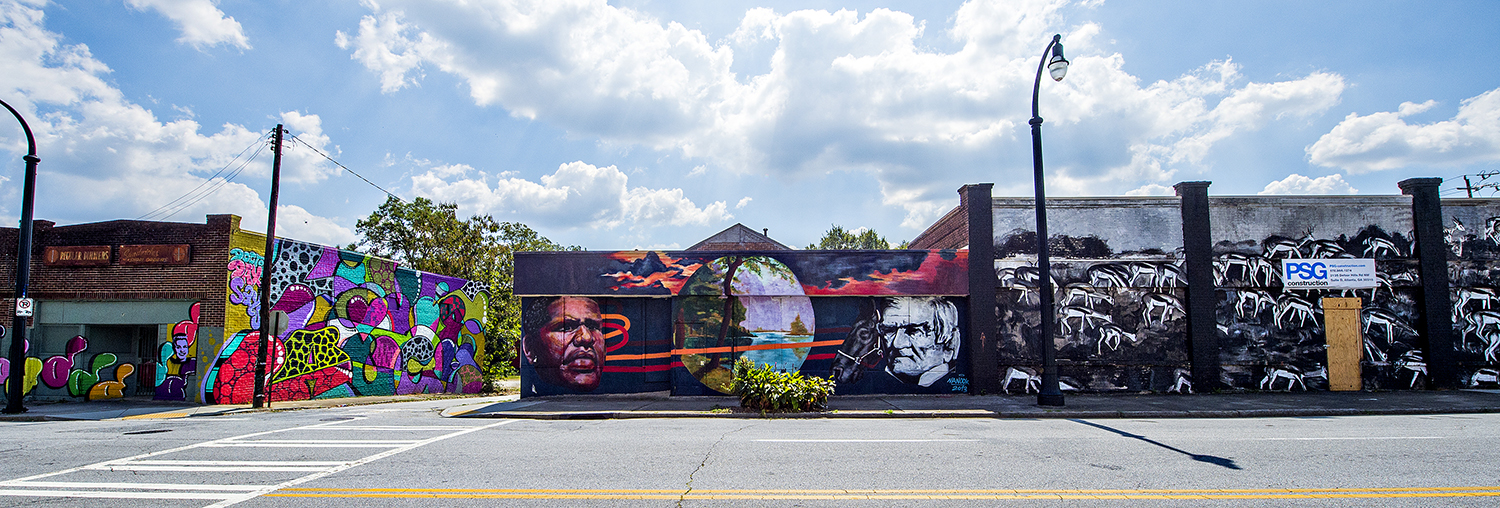
The same year Atlanta Magazine published Burns’s article, a local non-profit public arts organization set upon Georgia Avenue’s abandoned storefronts. They created more than a dozen dazzling murals, beautifying the trashed plywood and lending new meaning to the dulled brick. Georgia Avenue was transformed into a work of art – though the street could only have been treated like a blank canvas because it had been so long neglected, forsaken, and intermittently used for misbegotten projects.
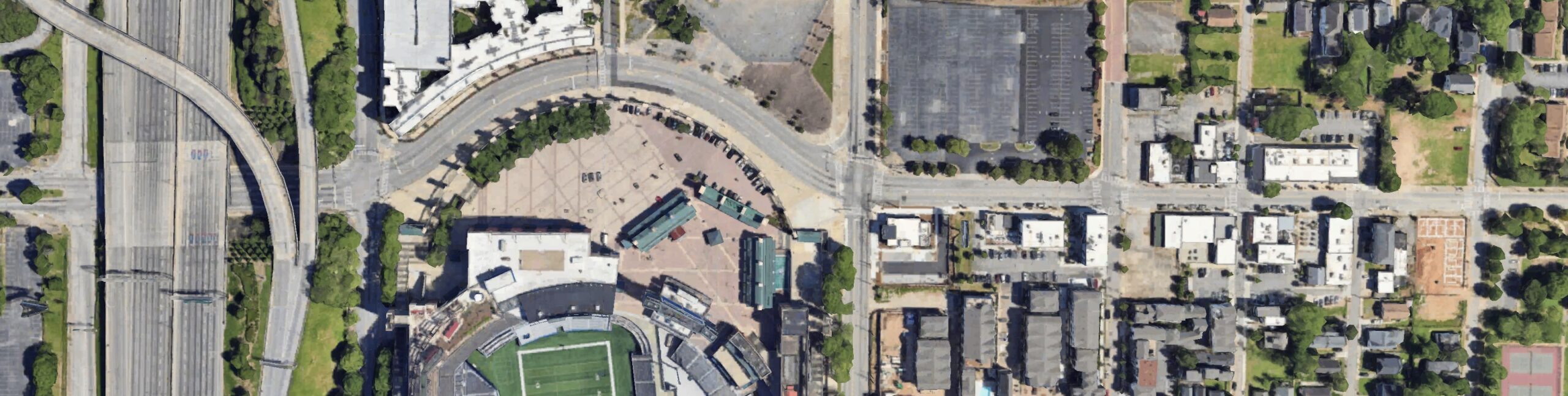
2013 was also the year the Atlanta Braves announced they were quitting Summerhill. When their lease expired in 2016, they would move to a new venue in the northwest suburbs of Cobb County. Not for the first time, the city and others saw Summerhill not as “wasted potential” but as an opportunity for economic development. Soon after the Braves vacated Turner Field, Georgia State University, along with a consortium of private developers led by local firm Carter & Associates, purchased the facility and dozens of acres in Summerhill. Georgia State quickly adapted Turner Field for its football program, then built a basketball and convocation center just south of the interstate interchange. As of this writing, construction is underway on an “athletics neighborhood” that will infill the blocks where Atlanta Stadium once stood, creating a contiguous sports campus where the Southside neighborhood used to be.
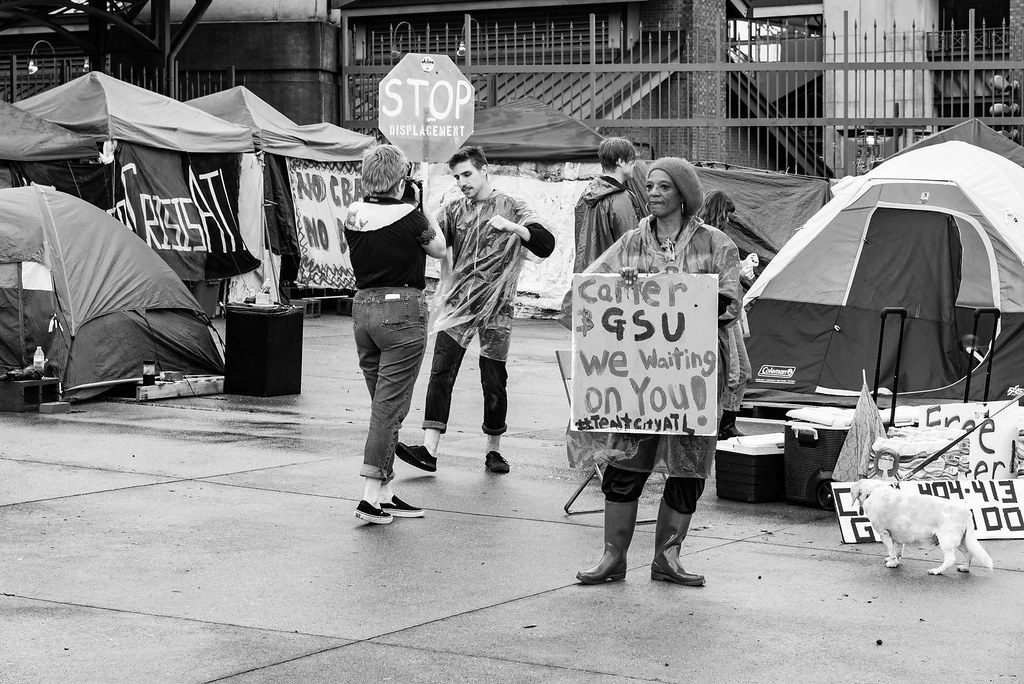
The change of ownership and announced development plans spurred some protest. Neighborhood activists and Georgia State students feared that the local community would be as poorly served by this round of development as had residents in the past. They asked the university to sign a Community Benefits Agreement, which would guarantee affordable housing and employment opportunities for local residents. University administration claimed to be prohibited from signing any legally binding agreements. Protesters also set up a tent city at the corner of Georgia Avenue and Hank Aaron, which Georgia State University police dismantled by force two months later.
Meanwhile, the announcements provoked a new wave of excitement about Georgia Avenue. The Braves had been less-than-ideal neighbors for local brick-and-mortar business owners, since Turner Field management wanted game attendees to travel from their cars to stadium concession stands without opening their wallets. Now local commerce could be nurtured and developed. Invest Atlanta, the city’s economic development agency, issued multi-million dollar bonds and tax abatements to subsidize and support a rebuild of Georgia Avenue.
Today, a combination of new construction and adaptively-reused old structures line the street: half a dozen restaurants and food retailers, an orthodontist, two boutique style salons, a brewery, and a yoga studio. More eateries and services, as well as a grocery store, are a few blocks away. New housing construction has nearly doubled Summerhill’s residential population. And finally, many decades after interstate construction created a barrier between Summerhill and the central business district, bike lanes and a new Bus Rapid Transit line along Hank Aaron promise to reconnect Georgia Avenue and all of the surrounding neighborhoods to downtown.