The Expressway Comes to Atlanta
In 1956, President Dwight D. Eisenhower signed the Federal-Aid Highway Act, establishing a national interstate highway system. Atlanta’s leaders had been planning a local expressway system since the 1940s; a more modern and efficient transportation infrastructure, they insisted, would boost the city’s economic growth and protect the downtown business district from encroaching blight. But where would these interstate highways go? The 1946 proposal recommended placing these new roads in “the neighborhoods of Atlanta through which it would be feasible to purchase suitable rights-of-way, being the most depreciated and least attractive.” Summerhill and the South Side were among the neighborhoods chosen for interstate construction.
Summerhill had already felt the effects of an earlier, massive municipal project, when the neighborhood’s northernmost blocks were demolished in 1940 to make room for the whites-only Capitol Homes public housing project. Black families who lost their homes were forced to move into increasingly-crowded segregated neighborhoods – an omen of the residential displacement soon to come.
Both the “North-South Expressway” (today the 75/85 Downtown Connector) and the “East-West Expressway” (Interstate 20) were slated to smash through Summerhill and the Southside – and the North-South Expressway would cut directly across Georgia Avenue.
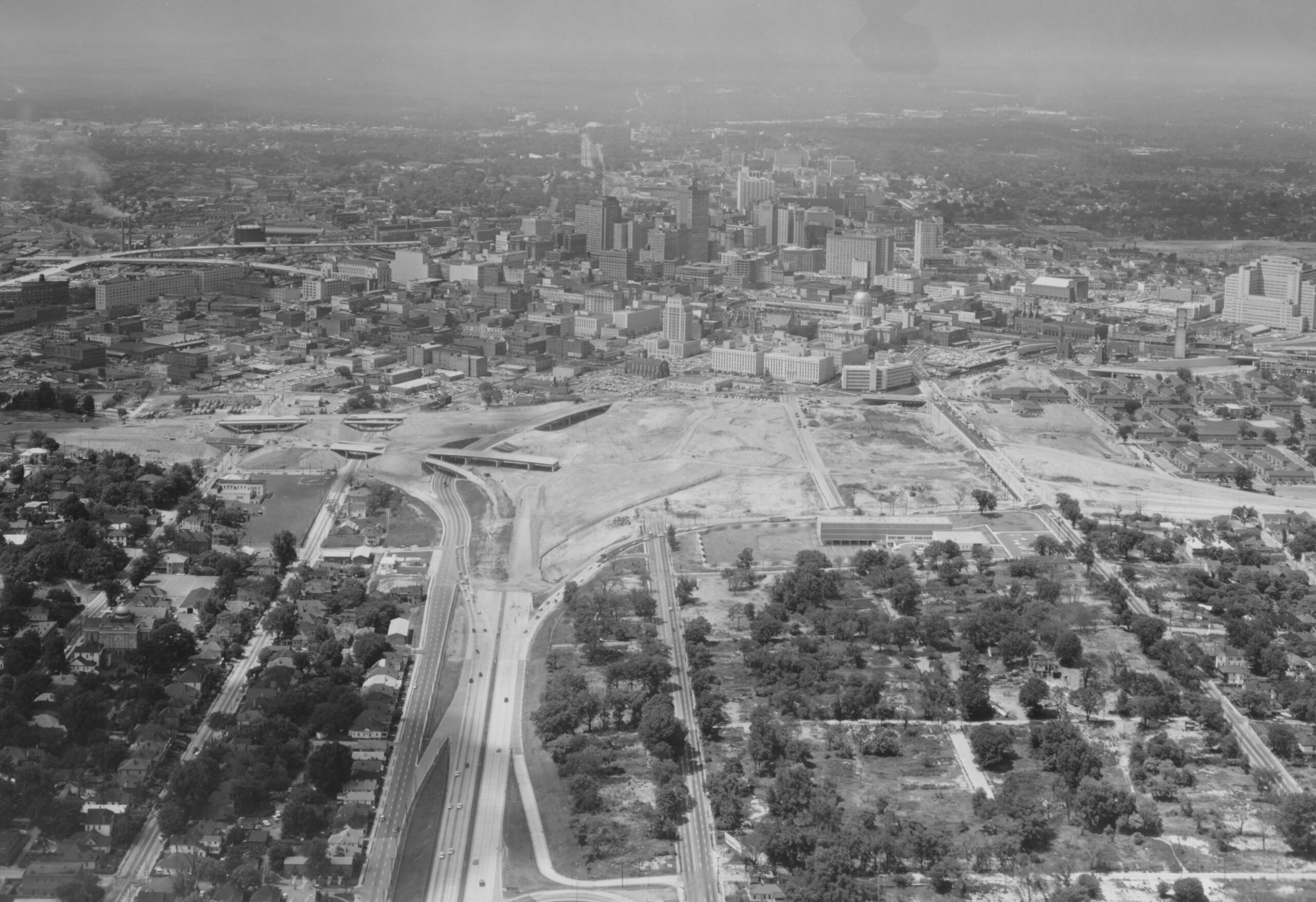
Compounding the project’s destructive impact, highway planners selected the Southside as the site of a massive interchange between the two roadways. At the time of its construction, it was the biggest interstate interchange east of the Mississippi River. Two dozen blocks of older, run-down residential and business structures were purchased or seized by the city; hundreds of residents, both Black and white, mostly renters, had to relocate.
In 1957, the city began clearance of once-grand Washington Street. The Atlanta Journal and Constitution recommended a stroll from Memorial Drive down to Georgia Avenue: get there soon, the reporter insisted, before every structure was leveled. “The wreckers are already busy, razing house after house as soon as the occupants move out,” he lamented. “This may be your last chance to see a section of old Atlanta.”
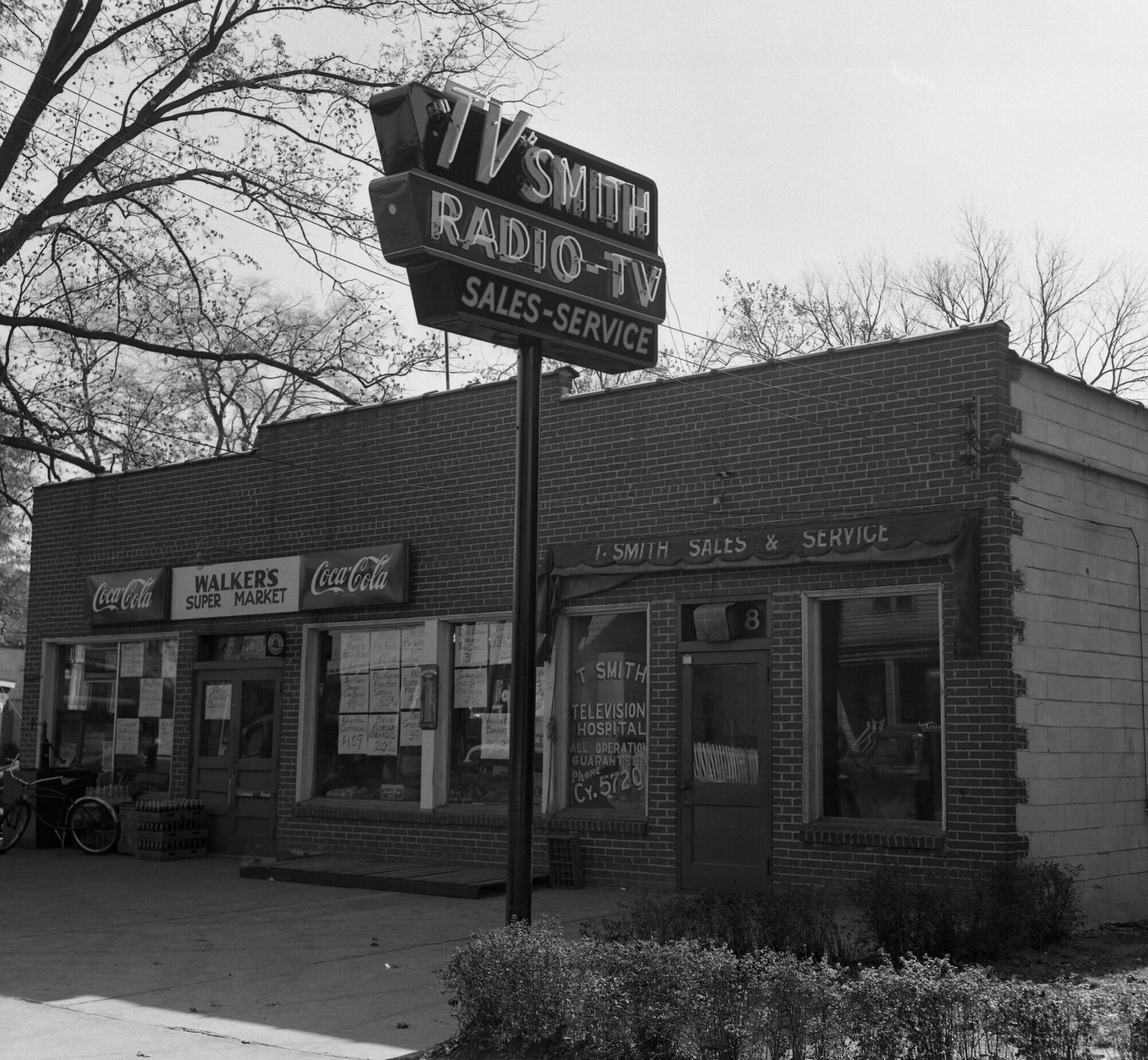
The westernmost block of the Georgia Avenue commercial district, from Pulliam to Washington, was cleared by the end of the decade.
All of the addresses on that block disappeared from the Atlanta City Directory: Walker’s Supermarket and Thad Smith’s radio and television repair shop, as well as 17 residences, gone.