Azar’s Package Store
Donald S. Azar’s grandparents had emigrated from Syria to Atlanta in the early twentieth century. By mid-century, members of the extended Azar family owned rental properties, as well as liquor, tobacco, and sundry stores, all over Atlanta. In 1965, Donald Azar opened D&J Liquors on the corner of Fraser Street, and Azar’s Package Store right behind it soon after.
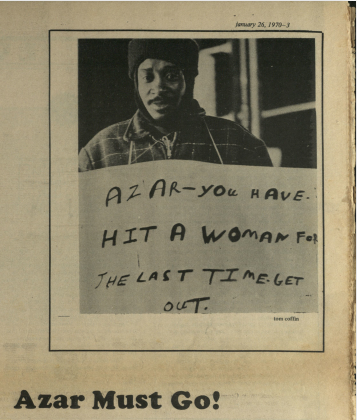
The relationship between Azar and the neighborhood seems to have been contentious from early on. That animosity turned violent at the beginning of 1970, when Azar was accused of physically assaulting a Black woman who worked in his store. Neighborhood residents picketed in his parking lot, holding signs that expressed their frustration with Azar specifically, as well as their more general grievance that white business owners in poor Black neighborhoods exploited and disrespected their customers.
Headline and image from The Great Speckled Bird, 1970
The Great Speckled Bird, Atlanta’s counterculture newspaper, supported the protest, reporting that Azar had tried to disperse picketers by handing out shots of Chivas Regal. “Time … may be winding up for Azar’s small retail empire in the Black community of Summerhill,” declared the Bird’s editors: “Azar must go.”
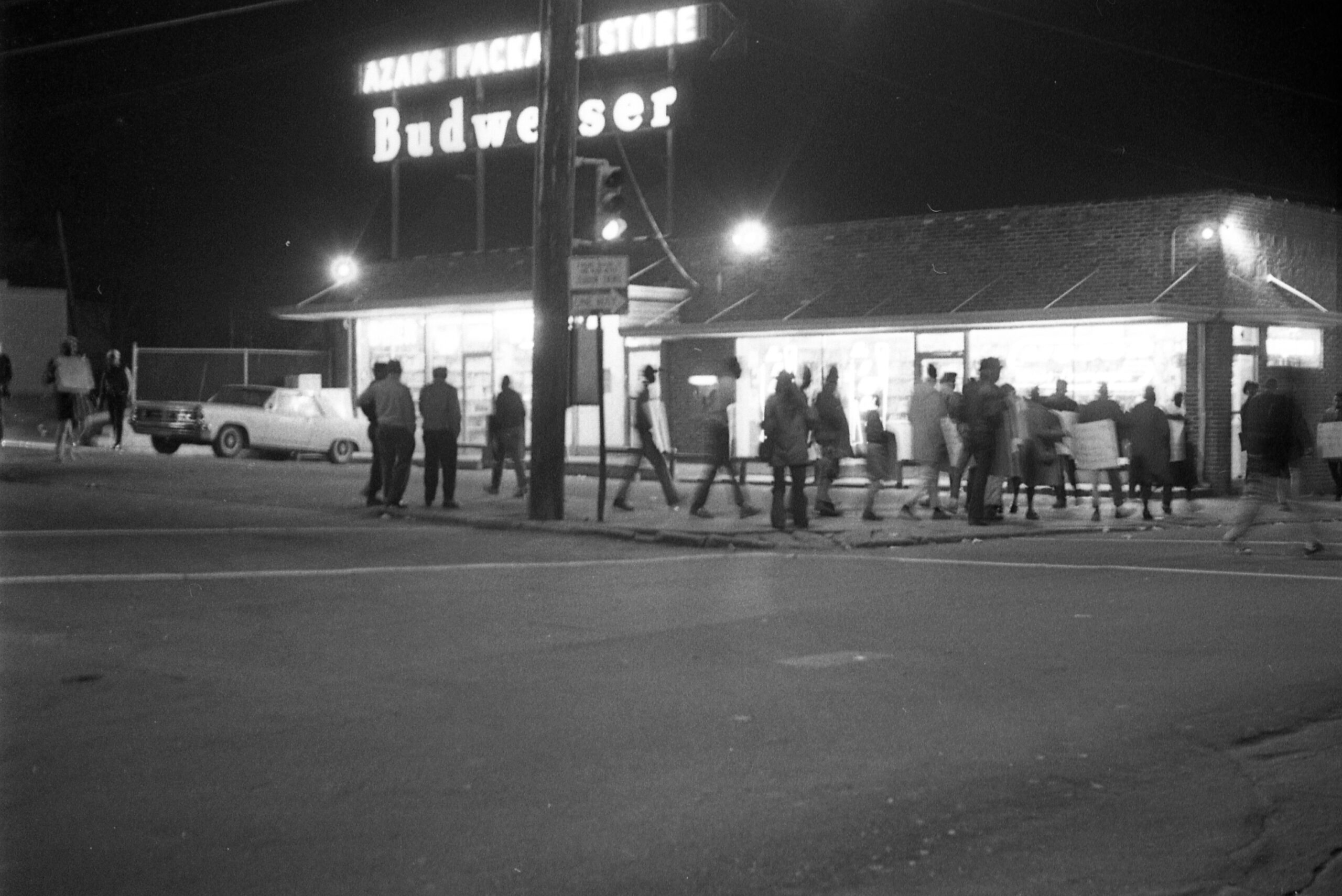
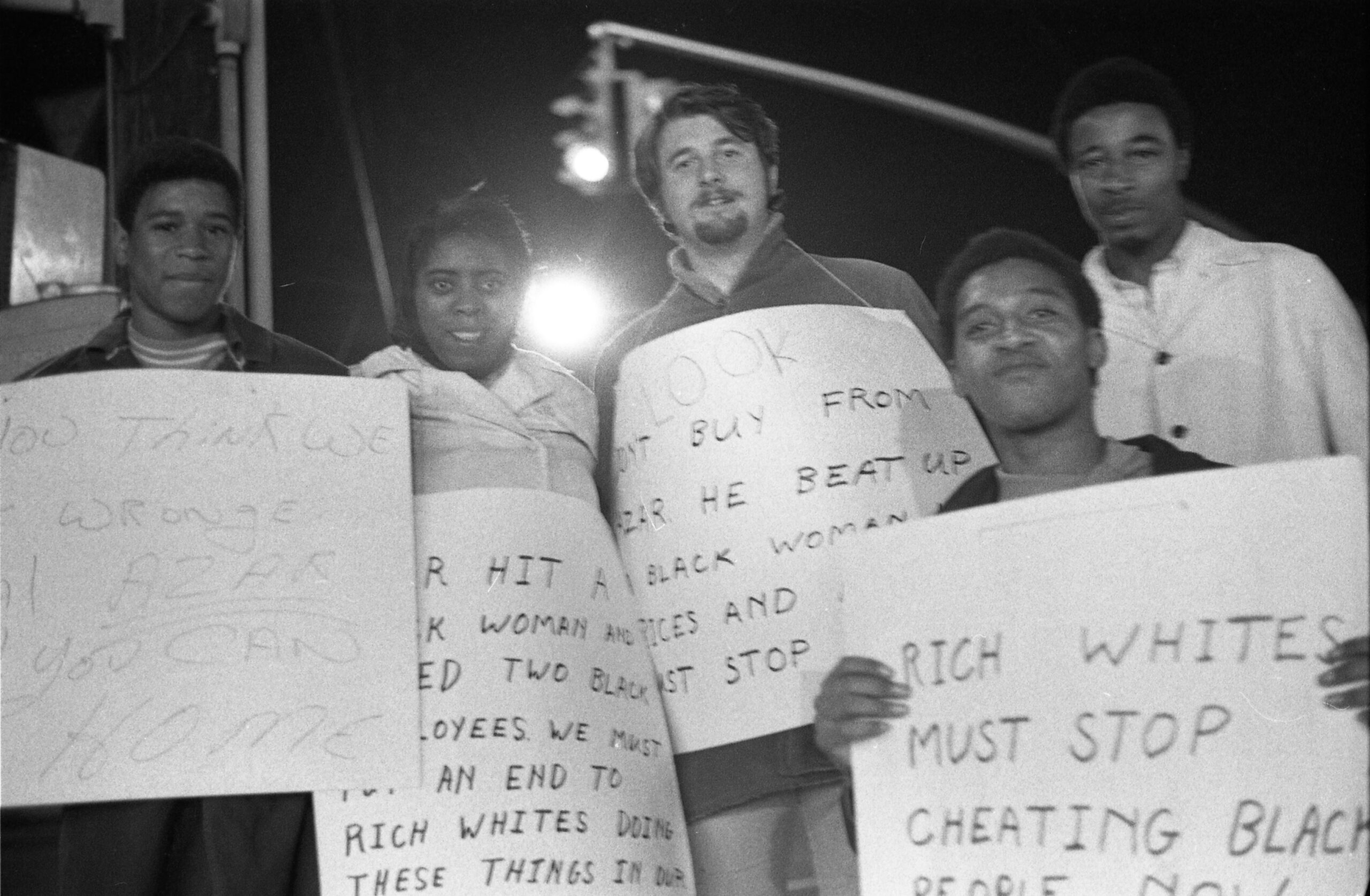
Picketing waned through the spring, but neighborhood anger reignited in early August, when Andre Moore, a fifteen-year old boy from Summerhill, was shot by white police officers on Georgia Avenue. Local witnesses reported that Moore was returning home from Tasty Dog when he saw the policemen questioning a friend in Azar’s parking lot. He approached the officers to defend his friend; when the officers pushed Moore against the police car and threatened to arrest him, he broke loose and ran.
The officers claimed that Moore had hurled a brick at them during his flight. But Karen Brown, who was ten years old and a neighborhood friend of Moore’s, was out on Georgia Avenue that evening and saw the shooting. She was among several witnesses who insisted that he hadn’t thrown anything.
As Moore turned south onto Reed Street, where his family lived, the police fired several shots in his direction. Moore collapsed in the front yard of his family’s home, where he died.
Outraged community members speculated that Azar had made the initial call to the police, instigating the tragic events. Picketing resumed, led in part by Edward Moody, the Mechanicsville activist (and now Model Cities official) who ran the clothing business across the street. Then on August 17th, bullets punctured Azar’s walls, and firebombs were thrown through his plate glass windows. Several other businesses nearby were torched as well.
WSB-TB footage from Georgia Avenue, August 18, 1970 — Click “Play” arrow to hear short interviews with local residents
The elderly white man in front of the damaged store at the end of the video is Donald Azar
Recognizing that Summerhill might erupt in violence yet again, as it had four years before, Mayor Sam Massell went down to Georgia Avenue the following day to see the burned storefronts and broken glass. But unlike his predecessor, Ivan Allen, Jr., who had walked down Capitol Avenue during the 1966 unrest (and even jumped up on the roof of a car to address the crowd), Massell never got out of his vehicle. An hour later, he was back at City Hall.
It was a peculiar encounter between old and new neighborhoods, and a sad last gasp of the old Southside. Massell was Atlanta’s first Jewish mayor; his Lithuanian-born grandfather and Georgia-born father had lived on Capitol Avenue in the 1920s. Donald Azar had grown up in a Syrian residential enclave on Summerhill’s northern border. Both now lived in affluent Buckhead, but each in his way remained a presence in the neighborhood – and both were regarded as agents of its current distress
After holding a meeting with neighborhood residents and Black municipal officials, Massell ordered a temporary halt to alcohol sales in Summerhill. But Azar refused to close, insisting that outside agitators and local radicals were using Moore’s death as an excuse to drive white businessmen out of the neighborhood. Local frustrations were palpable when television reporters came down to Georgia Avenue. Everyone they interviewed voiced the same complaint: the city had been making promises to Summerhill for years, but had failed to follow through in any meaningful way.
Finally, on August 24, Massell issued a statement on Summerhill, acknowledging the problem of poverty and police brutality in the neighborhood. His administration, he insisted, was “working to give proper assistance to all areas of Atlanta beset with unlawfulness, improper housing, poor employment opportunities, lack of recreation facilities and other problems.” He additionally ordered a 72-hour state of emergency in Summerhill, which forced Azar’s hand, at least temporarily.
Atlanta’s civil rights leadership had warned city officials about problems in Summerhill for years. After the summer protests, they described Azar’s as the “sensitive raw nerve” of the neighborhood. The store, its interactions with its local customers, and the circumstances of Moore’s death reflected so many of the community’s frustrations: callous merchandising of a problematic product; lack of youth programming and social services; and the Atlanta Police Department’s long history of mistreating Black residents. In September, the Community Relations Council asked the city that Azar’s liquor license be officially revoked.
But that didn’t happen. Instead, a superior court judge ordered picketing at Azar’s to cease. The following month, the police officers who shot Andre Moore on Georgia Avenue were tried for voluntary manslaughter. The all-white jury acquitted them of all charges.
Azar’s store remained open for decades. Today its doors are permanently shuttered, though as of this writing the Azar family still owns the property and the dilapidated arrow-shaped sign that hovers above.
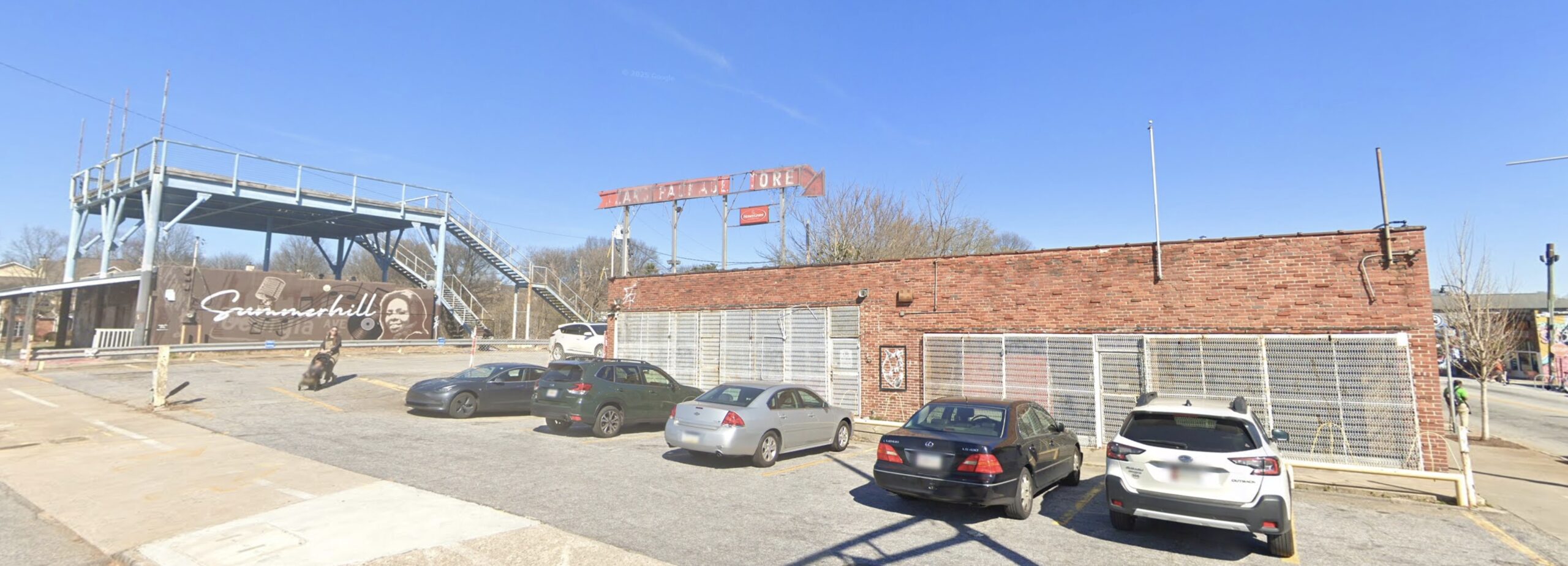
The Azar’s arrow is an artifact beloved by fans of Atlanta kitsch, a seemingly random reminder of a bygone era. But in truth, it stands as an unintended monument to the city’s decades of disinvestment in Summerhill and disregard for its residents.
That indifference continued, even after Maynard Jackson, Massell’s vice mayor, defeated Massell to become the first Black mayor of a major southern city. In 1973, the year Jackson took office, E.P. Johnson School, once the pride of Summerhill, was closed by the Board of Education. The building was boarded up and left to rot, blighting the neighborhood and attracting criminal activity. In 1979, the body of a nine year-old boy was found inside the school – the fourth child in what turned out to be a two-year-long serial murder spree of Black children in Atlanta.