After the Olympics
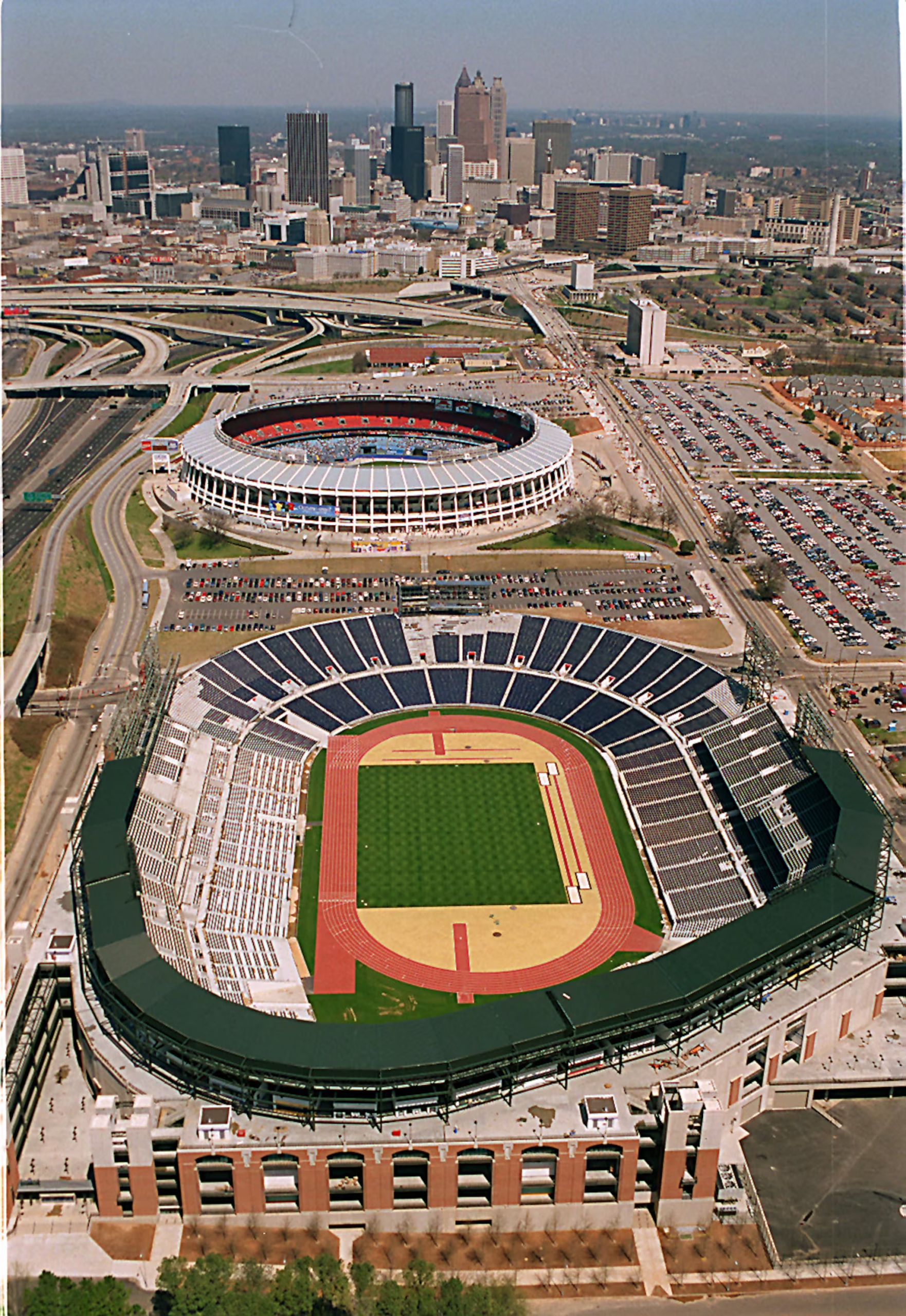
In the summer of 1997, Mayor Bill Campbell enacted one of the city’s pre-Olympic promises to the stadium neighborhoods. With nearly a ton of explosives and charges placed around the old stadium, Campbell pressed a button, setting off an implosion that crumpled the 32-year old structure in spectacular fashion. It became a parking lot, but the footprint of the old stadium’s infield was kept intact and Capitol Avenue was renamed Hank Aaron Drive, in homage to Aaron’s record-breaking career with the Atlanta Braves.
Photo of both stadiums during the 1996 Olympic Games
Another Olympic relic from Georgia Avenue – the Olympic Cauldron, famously lit by Muhammad Ali to signal the opening of the games – was also removed that year. Unlike the old stadium, it wasn’t demolished. When the Braves took ownership of the new stadium, the city moved the Cauldron, tower, and bridge several blocks north, to the corner of Hank Aaron Drive and Fulton Street, where it became an informal gateway to the Summerhill neighborhood.
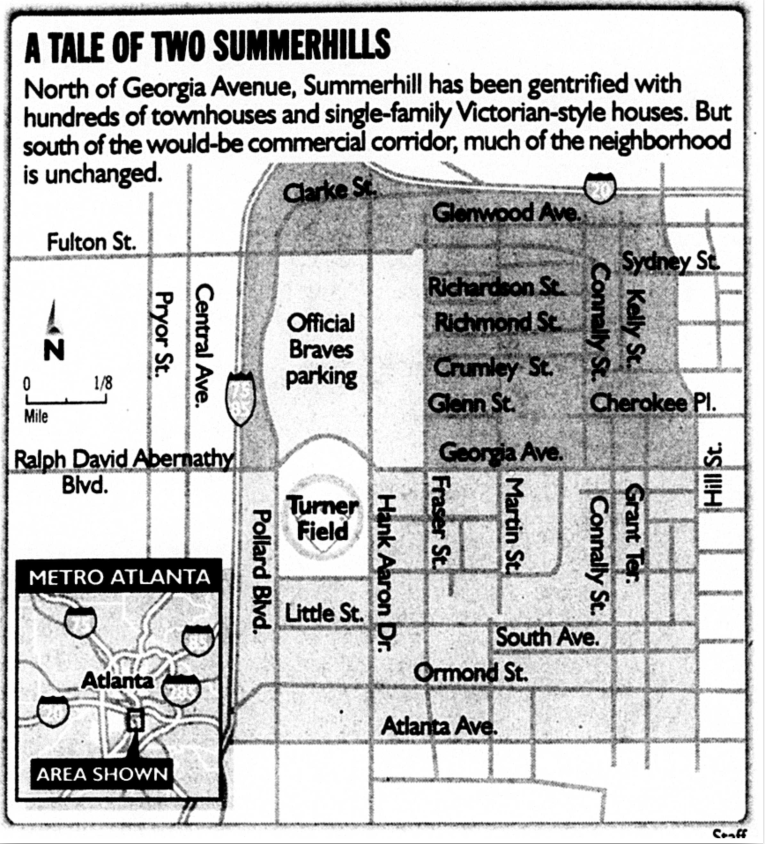
Overall, Olympic-era redevelopment did generate some neighborhood improvements. But most of the benefits were felt in Summerhill’s northern half, where new residents moved into newly-constructed single-family homes and townhouses that were not within the financial means of the vast majority of longtime local residents. The promise of affordable housing, it turned out, was easier made than kept.
Infographic from Atlanta Journal-Constitution, 1996
Improvements to Georgia Avenue’s commercial district, touted as a potential force for neighborhood revitalization, proved superficial and temporary. After the Olympics ended, the repairs to Georgia Avenue’s storefronts enticed no new businesses, so the buildings sat vacant. Making a bad situation worse, it came to light that Dean and the SNDC had been careless in their bookkeeping – though who was at fault remains a subject of dispute. Regardless, the SNDC was unable to purchase the Georgia Avenue properties from Elder, so the facades were once again boarded up.
And so they remained as the twenty-first century began. Georgia Avenue had become a tragically diminished version of its earlier self – a blighted old streetscape that Braves fans passed through on their way to the former Olympic Stadium, now Turner Field. As Rebecca Burns wrote in a 2013 Atlanta Magazine article about the state of the stadium neighborhoods, the storefronts of Georgia Avenue stood as both symbol and brick-and-mortar manifestation of “wasted potential.”