Bustle Begins
Georgia Avenue in the 1920s and 1930s
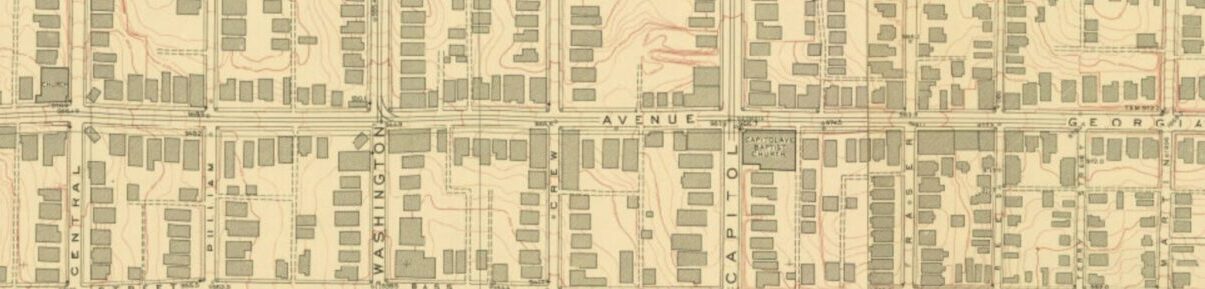
In the 1920s, new city zoning ordinance maps designated Georgia Avenue as a local retail district. By 1930, one would find along Georgia Avenue branches of national grocery chains, such as the Great A&P Tea Company, and outposts of local chains such as Jacobs Pharmacy. Eleven grocers, nine general merchandise markets, a butcher, a bakery, several hand laundry and dry cleaning establishments, a barber, and two shoe repair shops amply served the day-to-day household and service needs of the residents of Summerhill and the Southside.
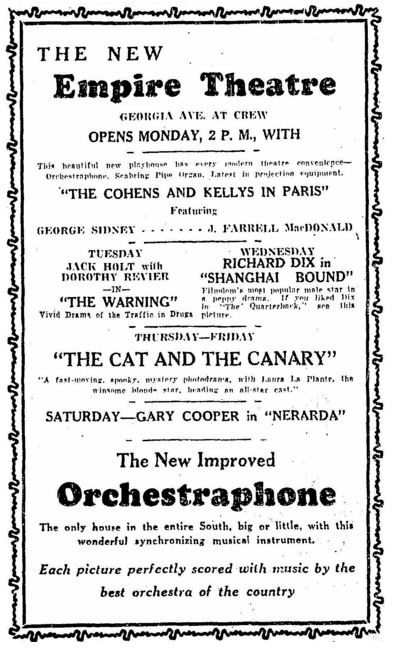
In 1928, the Empire Theatre opened on Georgia Avenue between Washington Avenue and Crew Street. Owner (and state legislator from Douglas County) Alpha Fowler equipped the Empire with modern sound and projection equipment. Unlike many of the city’s movie houses, which were designated as “white only” or “colored only,” the Empire sold tickets to all, regardless of race. But no theater in early twentieth century Atlanta offered racially integrated seating; at the Empire, Black moviegoers had to use a side entrance and sit in the balcony, since floor seats were reserved for white customers.
Advertisement for the opening of the Empire Theater, 1928
Summerhill’s Black residents shopped, and occasionally found employment, in Georgia Avenue’s stores. But even though Black entrepreneurs thrived all over Summerhill – Black-owned groceries, barbershops, and restaurants dotted Fraser, Martin, and Connally Streets – Georgia Avenue was not yet a site of Black entrepreneurship. Business owners during this early period were a mix of native-born whites, immigrants, and the sons and daughters of immigrants, reflecting the demographic makeup of the Southside’s white residents.
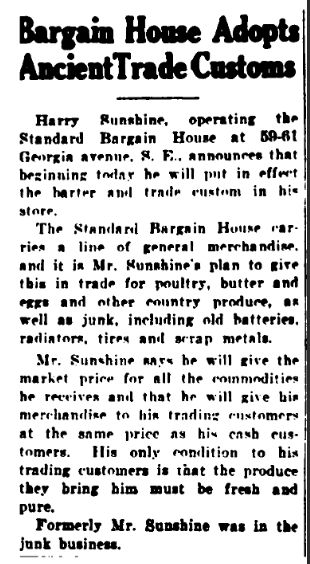
More than half of the white entrepreneurs along the Avenue were Jews who lived in the Southside neighborhood. Russian-born Harry Sunshine, who eventually founded Atlanta’s Sunshine Department Store chain, opened the Standard Bargain House, a general merchandise store. Customers could pay cash, or they could barter “country produce” from their home gardens or scrap materials instead, an option many surely appreciated during the Great Depression. Sunshine lived on Capitol Avenue, as did Hungarian-born grocer Alex Bernath, who established Bernath’s Market at the corner of Georgia and Fraser.
Article from Atlanta Constitution, 1930
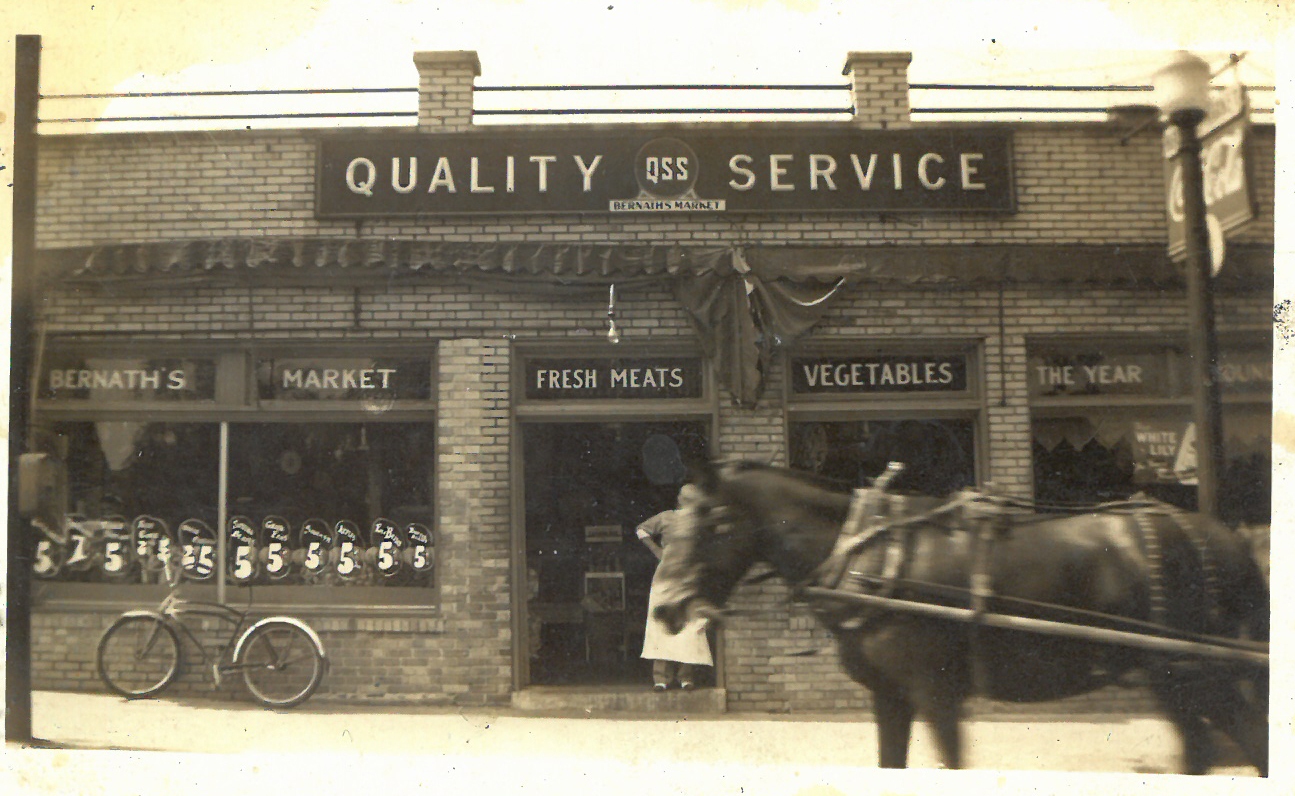
Sunshine and Bernath were members of the Southside’s growing community of Eastern European Jews. They founded synagogues and other cultural institutions along the northernmost blocks of their new neighborhood, and were joined by Greek and Syrian immigrants, as well as Jews from Turkey and the Isle of Rhodes. All of their houses of worship and communal centers were soon located on the Southside as well. When the Hebrew Benevolent Congregation moved north, to Peachtree Street near Ansley Park, their building on Pryor and Richardson Streets was purchased by the Greek Orthodox Church.
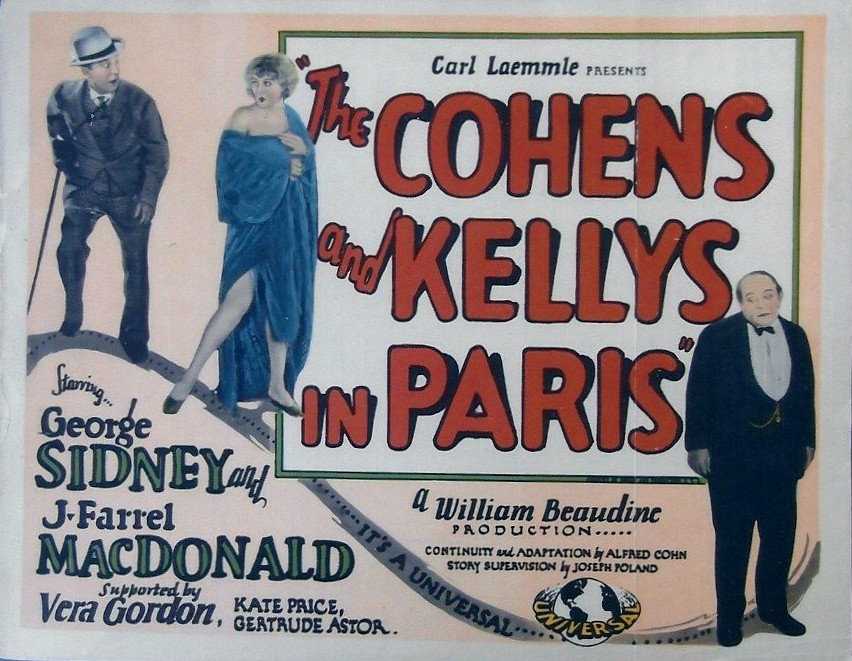
Perhaps it was no coincidence that the first feature film screened at the Empire Theater was “The Cohens and the Kellys in Paris,” a screwball comedy about two immigrant families, one Jewish and the other Irish, who take a European vacation together after their American-born children fall in love.
Movie lobby card, 1928