Memphis Sanitation Strike
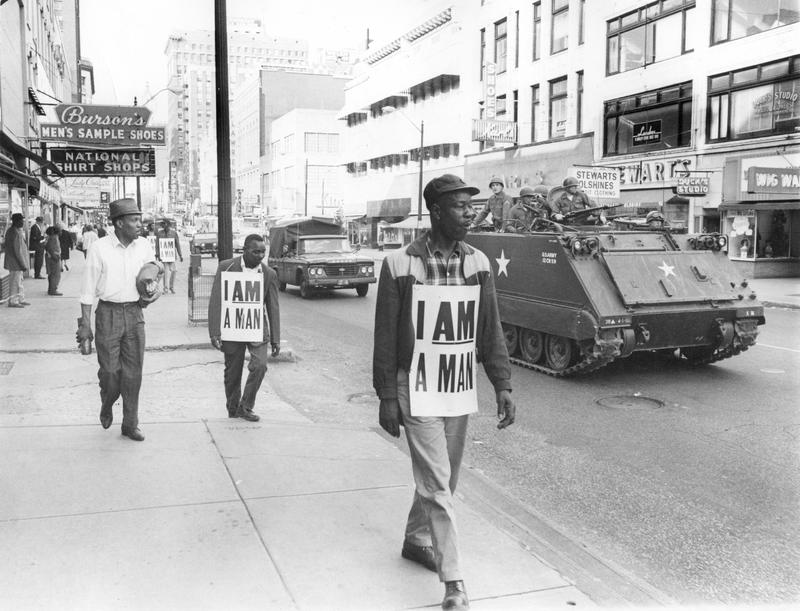
Courtesy of University of Memphis Libraries/Special Collections/Memphis Press-Scimitar
The “I Am a Man” signs carried by the striking Memphis sanitation workers on March 28, 1968, are emblematic symbols of the struggle for civil rights and economic justice. The strike began on February 12 after two sanitation workers were killed on the job, and Black workers began to protest unfair and prejudicial work policies.
Support for the strikers in the Black community grew, and Memphis leaders invited the involvement of Martin Luther King, Jr., who was planning the Poor People’s Campaign. In the later 1960s, the targets of King’s activism were often the underlying poverty, unemployment, lack of education, and blocked avenues of economic opportunity that confronted Black Americans.
King was assassinated in Memphis several days later on April 4, 1968, as leaders of the Southern Christian Leadership Conference (SCLC) were negotiating non-violent strategies in support of the strikers and the Black community.