Fair Employment Practices
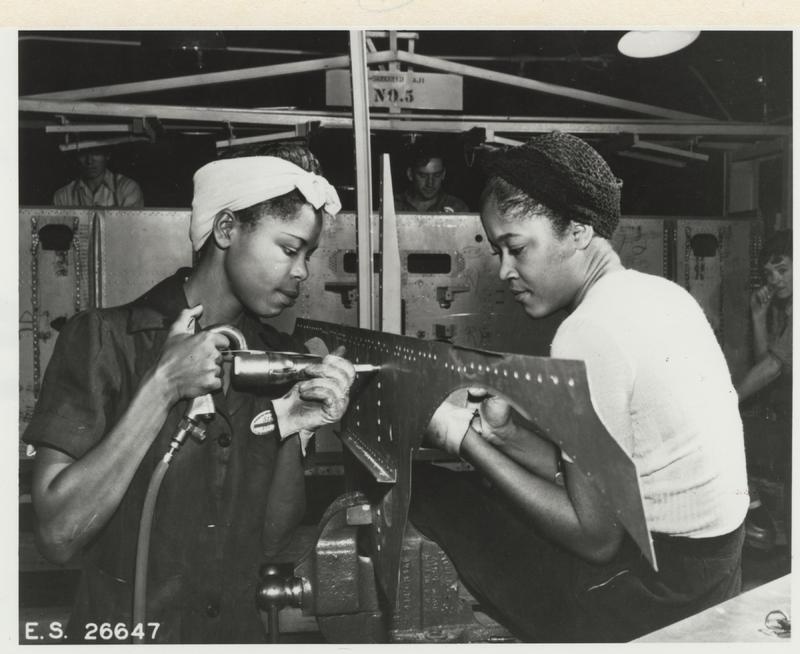
Courtesy of Labor Archives and Research Center, San Francisco State University
In 1941, President Franklin D. Roosevelt signed Executive Order 8802, which desegregated the nation’s war industries and established a Fair Employment Practices Committee to monitor workplace discrimination—one of the first actions by the federal government to address civil rights.
American women, including minority women, entered the workforce in unprecedented numbers during World War II because widespread male enlistment left gaping holes in the industrial labor force. Between 1940 and 1945, the female percentage of the U.S. workforce increased from 27% to nearly 37%. Women of all races were forced to give up their jobs when men returned from the war.
This 1971 United Farm Workers (UFW) poster outlines health disparities experienced by agricultural workers. Cesar Chávez, Dolores Huerta, and Gilbert Padilla founded the UFW in California, 1965, to address the inequities in agricultural work, and to fight for justice and human dignity. After the famous successful grape boycotts of the 1960s, UFW targeted lettuce growers in the 1970s.
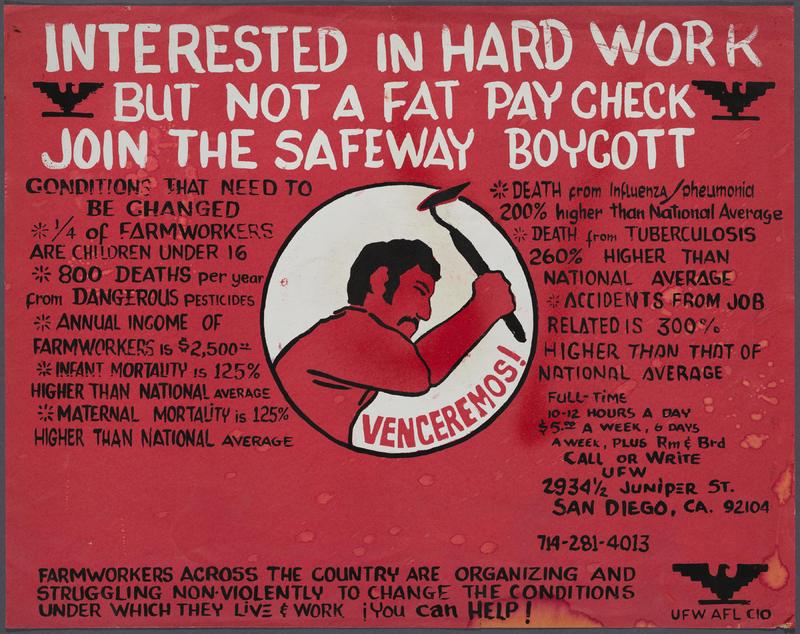
Courtesy of the artist and the California Ethnic and Multicultural Archives, University of California at Santa Barbara